
Menu
Understanding the End of Duration of Status for F-1 and J-1 Students
Contributor: Van T. Doan
 Share
Share
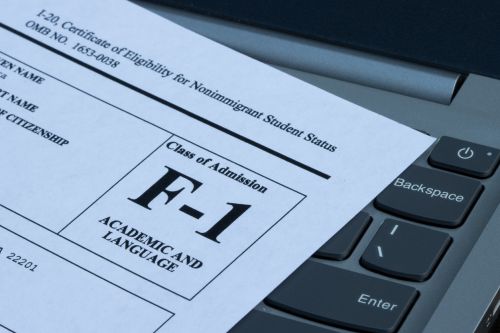
For years, F-1 and J-1 students have been admitted to the United States for duration of status, rather than until a specific date. That's changing. If you've heard that the duration of status is ending in 2026, the September 15 effective date is one you'll want on your radar. DHS finalized a rule in July 2026 that replaces duration of status with fixed admission periods for F, J, and I nonimmigrants. For students, that means the end of your authorized stay will be tied to a specific date rather than simply to your continued participation in your program. If you need more time, you may have to request an extension.
KEY TAKEAWAYS
- DHS finalized the rule on July 17, 2026. It replaces duration of status with fixed admission periods for F, J, and I nonimmigrants starting September 15, 2026.
- F-1 students will generally be admitted for their program length, up to four years. The post-completion grace period drops from 60 to 30 days.
- Students in valid F-1 or J-1 status on September 15, 2026, get transition protection and generally don't need to file anything to receive it.
- Traveling internationally after September 15 can end that protection. Students who need more time may have to file Form I-539, and a late filing or denial after the admission date can create unlawful-presence problems.
What Changes on September 15, 2026: Fixed Admission Dates Replace Duration of Status
Traditionally, F-1, J-1, and I-94 nonimmigrants were admitted for as long as they maintained their program. There wasn’t a set date that ended their admission status on the Form I-94. This process will change on September 15, 2026, when the new rule goes into effect. Under the new rules, F-1 and J-1 students will generally receive a fixed Admit Until Date tied to their program length on the Form I-20 or DS-2019. That time period will be capped at four years.
Before F-1 and J-1 students were generally admitted for duration of status. Now, they will generally have a fixed admission date tied to their program. Other changes include:
- F-1 admission: The admission period will generally match the program length, up to four years.
- F-1 post-completion grace period: The post-completion grace period drops from 60 days to 30 days.
- J-1 grace period: The 30-day grace period for J-1 nonimmigrants remains unchanged.
In addition, for I-94 nonimmigrants, admission will be capped at 240 days.
Transition Rules for Students Already in Valid F-1 or J-1 Status
Students who currently have valid F-1 or J-1 status on September 15, 2026 can remain through their current Program End Date. However, that protection is capped at four years from the effective date and their original grace period. They are not required to file additional documentation to receive the transition protection.
Students who timely file Form I-765 for post-completion optional practical training (OPT) or STEM OPT before March 18, 2027 generally don't need a separate Form I-539, unless they travel internationally in the meantime.
Extending Your Stay After September 15, 2026, and Why Travel Can Undo It
If you need to stay in the United States beyond your Admit Until Date after September 15, 2026, you will generally need to file Form I-539 with U.S. Citizenship and Immigration Services (USCIS). You can file up to 180 days before your Admit Until Date expires. If you file on time, you can generally remain in authorized status while USCIS reviews the application, even if your admission period expires first. A filing fee applies, and a biometrics appointment is typically required.
Timing matters if USCIS denies the request. If your Form I-539 is still pending when your Admit Until Date expires and is later denied, unlawful presence can begin immediately with no grace period. If USCIS denies the application before that date, you can generally remain through the applicable grace period, with unlawful presence beginning after it ends.
Travel can create another problem. International travel on or after September 15, 2026 can end transition protection and reset your admission period. If you leave while an extension is pending and return with a new Form I-20 or DS-2019, USCIS may treat the pending extension as abandoned.
For that reason, F-1 and J-1 students should be cautious about international travel while an extension is pending. Review your travel plans and pending application with your school and an immigration attorney before leaving the United States.
Added Risks for F-1 Students from Travel-Ban and Visa-Pause-Listed Countries
Students from travel-ban or visa-pause-listed countries should not assume international travel is safe. Entry bans, closed consular posts, and multi-month administrative processing can make returning to the United States difficult or impossible.
The new rule changes are also separate from Presidential Proclamation 10998 and the State Department’s 75-country immigrant-visa pause. Presidential Proclamation 10998 took effect January 1, 2026. It places a full or partial suspension on visa issuance and entry into the U.S. for nationals from 39 countries and Palestinian Authority document holders. The State Department also issued a 75-country immigrant-visa pause. These additional consular and processing obstacles can make travel and extension filings far riskier.
The same travel that resets the Admit Until Date can also mean an inability to return at all. Entry bans, closed consular posts, or multi-month administrative processing can also impact student travel. The higher risks aren’t limited to the specifically named countries. They can also apply to stateless individuals and students with a pending EOS or OPT application tied to one of these countries. Don’t make the mistake of assuming you are unaffected. Speaking with an immigration lawyer before submitting your documentation can assure you are applying for the correct status.
Applicants can expect extended background checks and more intensive scrutiny of their civil and academic records. As a result, Form I-765 and Form I-539 may be delayed. Maintaining consistent entries on Form DS-160 filings, prior submissions, and public profiles is crucial. Students who engage in activism or post publicly about conflict regions, human rights, or political movements may face deeper background checks and vetting. This can delay applications further and increase the chance of receiving a Request for Evidence (RFE). Students should be prepared to provide further information about their affiliations and intent.
Specifically, common risk categories can include:
- Travel: Leaving the U.S. can create problems with reentry.
- Visa processing: Consular restrictions and administrative delays can complicate travel.
- USCIS filings: I-765 and I-539 applications may face additional review.
- Background checks: Civil, academic, and immigration records may receive greater scrutiny.
- Public activity: Political posts, affiliations, and other online activity may be reviewed more closely.
An immigration lawyer can best explain if you will be impacted by one or more of these restrictions or risks.
Contact a Maryland Immigration Attorney
The new rules give F-1 and J-1 students more dates to keep track of and less room for timing mistakes. If you're planning an extension, transfer, OPT, or international travel, it's worth looking at how the new rules apply to you before making a move. Our firm has experience helping F-1 and J-1 students and their families with extensions, program transfers, and nonimmigrant status issues. You can visit our answers for individuals and families page or contact us to discuss your options.
Categories: Immigration Law