
Menu
What’s Going on with Birthright Citizenship?
 Share
Share
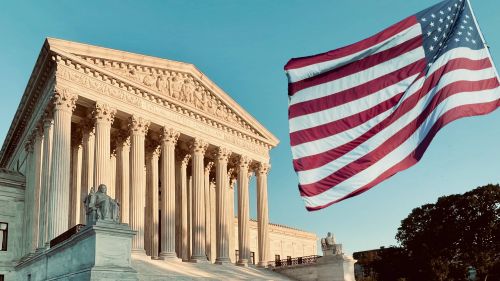
The issuance of Executive Order 14160 in January 2025 intended to limit U.S. citizenship to children with at least one parent as a U.S. citizen or green card holder. The order, which has since been blocked by multiple lower courts, would effectively end birthright citizenship for children born to undocumented or temporary status parents if upheld by the Supreme Court. While the order has not yet been permitted to take effect, a final ruling is expected in June or July of 2026.
Key Takeaways
- Birthright citizenship grants citizenship to those born on U.S. soil or to parents living abroad who are U.S. citizens.
- Executive Order 14160 was issued in January 2025, intending to end birthright citizenship for children born to undocumented or temporary status parents.
- The Supreme Court is set to hear the case, Barbara v. Trump this term, which would determine the constitutionality of the executive order.
What is Birthright Citizenship?
Birthright citizenship allows citizenship to be granted to individuals upon birth based on either their ancestry or place of birth. In contrast with naturalization, which requires going through a process involving applications, interviews, and tests with the U.S. Citizenship and Immigration Services (USCIS), birthright citizenship is an automatic status at birth.
There are two different forms of birthright citizenship. Birthplace-based citizenship, also referred to as jus soli (Latin for “right of the soil”), is guaranteed by the Fourteenth Amendment to the U.S. Constitution. Ancestry-based citizenship (jus sanguinis) extends citizenship rights to children born abroad to U.S. citizens, as long as statutory requirements are met.
Birthplace-Based Citizenship
Birthplace-based citizenship gives citizenship rights to anyone born on U.S. soil or one of its territories. As long as the child’s birth occurred within the geographical limits of the United States, they are subject to jurisdiction, and with very few exceptions, regardless of parental immigration status.
Ancestry-Based Citizenship
A child born outside the United States can still be a U.S. citizen at birth if certain conditions are met. The laws which set the conditions have changed over time, thus it’s imperative to consult an immigration attorney to determine if a child born outside the U.S. is in fact a U.S. citizen. At present, If both parents are U.S. citizens and at least one resided in the United States before the birth, the child is entitled to citizenship rights. Citizenship may also be granted if one parent is a U.S. citizen and the other parent is an alien, provided the citizen parent was physically present for at least five years (at least two years must have been after the age of 14) before the child’s birth.
What Will the Supreme Court Be Deciding Regarding Birthright Citizenship?
The U.S. Supreme Court is set to hear the case, Barbara v. Trump on April 1, 2026, which will ultimately decide whether Executive Order 14160 violates the 14th Amendment’s Citizenship Clause. The key question in the case is whether children of non-U.S. citizens without lawful status fall under U.S. jurisdiction for the purposes of birthright citizenship.
While multiple lawsuits have been filed to challenge the executive order, Barbara is structured as a nationwide class action to provide broader protection to millions. Filed in New Hampshire by the ACLU and other legal organizations, the lawsuit was brought by several families on behalf of themselves and similarly situated individuals. Using pseudonyms, the plaintiffs include a Honduran asylum applicant, a Taiwanese citizen in the U.S. on a student visa when her child was born, and a Brazilian applicant for permanent residence at the time of his son’s birth. In the suit, the parties argue that the order unlawfully strips their children of citizenship rights, and that they seek to preserve their access to citizen-related benefits, such as SNAP, Medicaid, and Social Security.
Holding that the plaintiffs were likely to succeed on the merits, the U.S. District Court for the District of New Hampshire issued a preliminary injunction and provisionally certified a nationwide class of children impacted by the executive order. The lower court’s decision was appealed to the U.S. Court of Appeals for the First Circuit. Before a ruling was rendered, the Supreme Court granted certiorari.
The executive order is currently on hold, pending the Supreme Court’s decision in the case. In the event the constitutionality of the executive order is upheld, children born to undocumented or non-permanent resident parents would be denied automatic citizenship. As a U.S. birth certificate alone would be insufficient to prove citizenship, documentation of the mother or father’s lawful status would need to be provided in order for a child to receive a Social Security number or passport.
Contact an Experienced Immigration Attorney
If you have questions or concerns about birthright citizenship, it’s best to consult with an experienced immigration attorney who can best advise you. An immigration attorney can help you obtain the documentation you need, navigate the process, and challenge a wrongful denial of citizenship. To learn more about the citizenship process and how we can help, contact us today.
Categories: Immigration Law