
Menu
What Green Card Holders Should Know if Detained at a U.S. Port of Entry
Contributor: Van T. Doan
 Share
Share
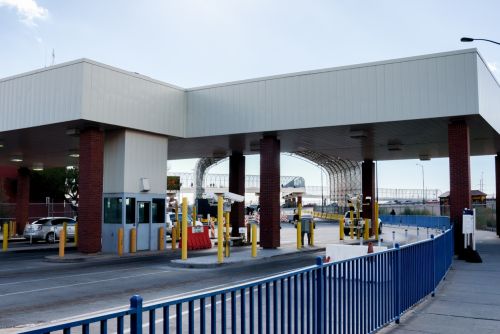
All international travelers, including lawful permanent residents (green card holders) may be inspected by U.S. Customs and Border Patrol (CBP) when entering the United States through a U.S. airport or land port of entry.
Ordinarily, the prospect of inspection wouldn’t be an issue. However, the current administration has announced immigration crackdowns as a priority, and even U.S. citizens have been caught up in government efforts to identify people who are in the U.S. illegally. It’s understandable that you might be concerned about increased scrutiny when trying to come back into the country as a green card holder. As a lawful permanent resident, you have the right to travel outside the country and to return to your home within the United States. Even so, you should be prepared to deal with CBP, and that includes being aware of your rights as a green card holder at a U.S. port of entry.
Are You a Returning Resident or an Arriving Alien?
CBP screens green card holders to decide which category they fall into: “returning resident” or “arriving alien.” As a general rule, if you are found to be a returning resident, you should be processed and admitted into the U.S. without much difficulty. It’s another story if you’re considered an “arriving alien.”
The term “arriving alien” doesn’t just apply to foreign nationals who are coming to the U.S. for the first time. Even a green card holder can be considered an arriving alien if they meet any of the following criteria:
- Trying to enter the U.S. without inspection
- Absence from the U.S. for a continuous period of more than 180 days
- Abandonment of lawful permanent resident status
- Engagement in illegal activity after leaving the U.S.
- Left the U.S. while in extradition or removal proceedings
- Committed certain crimes (outlined in Immigration and Nationality Act §212(a)(2) (unless granted an immigration waiver)
The distinction between “returning resident” and “arriving alien” is important because returning residents cannot be found inadmissible. Arriving aliens, on the other hand, are subject to grounds of inadmissibility and can be placed into removal proceedings. If CBP decides that there are questions that prevent you from being admitted quickly, you may be pulled aside and taken to another area for a “secondary inspection.” It can be intimidating, but don’t panic; this doesn’t automatically mean that you won’t be allowed back into the U.S. Here’s what you need to know if you are taken aside for secondary inspection.
What Happens in Secondary Inspection?
Secondary inspection may take only a few minutes, but may take up to several hours, depending on the circumstances. Here’s what you should expect from the process. CBP will ask you additional questions about your travels and closely inspect your green card, passport, visas, and other travel documents to make sure they are authentic, valid, and unexpired. You may be photographed and have fingerprints taken, and these may be compared against biometrics data on file. The agent(s) will likely run background and records checks to see if you are in any criminal history databases or on any watchlists.
CBP will also conduct a thorough review of your immigration history, including the length of stays outside the U.S. and any prior encounters with immigration enforcement or pending immigration proceedings. Your luggage and personal items will be inspected as well, including your electronic devices. You may be asked whether you give consent to the search of your devices, but you cannot prevent CBP from inspecting them, even if you don’t give consent.
It is possible that you will be asked to sign Form I-407 (Abandonment of Lawful Permanent Resident Status). Do not sign this form! If you do not sign, the government must prove, by “clear, unequivocal, and convincing evidence,” that you abandoned your LPR status in removal court proceedings. They cannot do this at a port of entry. If you sign the form, however, you are agreeing that you are no longer a lawful permanent resident and give up your right to appear in court.
No matter what you are told, you have the right to refuse to sign Form I-407. You can say, “I don’t want to abandon my lawful permanent resident status, so I decline to sign this form.” Declining to sign doesn’t guarantee that you will keep your status, but it does force the government to go through proper legal processes if they want to remove you from the country.
What Happens if You Refuse to Sign Form I-407 or Other Documents?
If you refuse to sign Form I-407, you may be detained overnight or transferred to immigration detention. That might sound like a terrible outcome, but it is still better than voluntarily giving up your green card status by signing the form.
CBP may take your physical green card. If they do, you can ask them to provide evidence of your lawful permanent resident status by stamping your passport. They may still refuse, at which you can schedule an appointment with USCIS to get a passport stamp that indicates your LPR status. You may be asked to sign other documents in addition to or instead of Sign I-407. You should never sign anything unless you fully understand how it will affect your immigration status. Do not rely on CBP agents’ verbal assurances about what the document means.
What are Your Rights if You are Detained?
First and foremost, you have the right to a hearing before an immigration judge if CBP claims that you are removable. Unless you sign the form indicating that you’re abandoning your LPR status, only an immigration judge, not CBP, can take that status away. You also have the right to contact the consulate for your home country. The consulate can help you speak to a lawyer or a family member, communicate with the U.S. government on your behalf, and ensure that you are not mistreated.
You have the right to refuse to answer questions about your political beliefs and associations or your participation in protests. You also don’t have to answer questions about activity that is protected under the First Amendment. You have the right to remain silent and not to sign any documents without legal advice. You can ask for a lawyer, but CBP is not legally required to provide one for you or to give you access to a lawyer.
If written statements are prepared for you, you have the right to review them in a language you can understand. You also have the right to an interpreter if you do not understand the questions CBP or other immigration officials are asking you. Regardless of how long you were detained, you should speak with an immigration attorney after your release, especially if your green card was taken, you were asked to sign documents, or you were issued a Notice to Appear (NTA) in Immigration Court.
Preparing for Travel Outside the U.S. as a Green Card Holder
Whatever the reason for your travel, you will feel more at ease if you know you have done everything possible to prepare for questioning by CBP upon your return to the U.S.
Here are some tips to make sure you are ready:
- Consult with an immigration attorney before you leave the country, especially if you have a pending criminal case or immigration matter, or any kind of criminal record or past immigration violations.
- Consult with an immigration attorney if you are a conditional resident (e.g. if you are married to a citizen or green card holder but don’t yet have your permanent green card).
- If possible, travel with a completed Form G-28 (Notice of Entry of Appearance as Attorney or Accredited Representative)
- Keep a piece of paper with the contact information for both your attorney and your home country’s consulate on you when you travel. Don’t rely on your phone to access this information.
- Give your family or a close friend your travel itinerary and check in with them when you land.
If you have concerns about traveling outside the U.S. as a green card holder, speaking to an experienced immigration attorney can ease your mind. Contact our law office to schedule a consultation.